Denmark’s Government Ditches Microsoft for Open Source

“Up to half of employees at Denmark’s Ministry of Digital Affairs will be switched to (an unspecified version of) Linux in place of Windows, and move from Office 365 to the leading open source productivity suite LibreOffice. Denmark’s minister of digitisation, Caroline Stage Olsen, confirmed the migration is in progress to Danish media outlet Politiken (paywalled), adding that if all goes well the whole ministry will switch to using open source software by the autumn. Denmark, like many countries, wants to have greater control over its own digital infrastructure, data, and cloud services.”

This certainly seems to be a move that is growing in popularity across Europe. It does a bit of effort for any change, but this will likely also mean more investment is local skills and resources, and many governments are prepared to pay a premium for that.

See https://www.omgubuntu.co.uk/2025/06/denmark-government-replaces-microsoft-with-linux-libreoffice

Nextcloud in 2025: How 25 Million Users Escaped Big Tech’s Data Prison

Nextcloud powers 400,000+ servers worldwide, giving organizations like the German federal government complete control over their data while escaping Big Tech surveillance. Discover why millions choose open-source collaboration over Microsoft and Google’s data-mining platforms.

Today, ITZBund operates Nextcloud for 300,000 employees across the German federal government. The French Ministry of Interior runs it for their 300,000 staff. Schleswig-Holstein deploys it across 25,000 systems. Swedish federal agencies, Dutch ministries, universities across Europe, hospitals, law firms, and millions of home users rely on Nextcloud for file storage, video conferencing, document collaboration, email, calendars, and now AI assistance. These organizations discovered they could have enterprise-grade collaboration tools while maintaining complete control over every byte of their data. No surveillance capitalism. No vendor lock-in. No data held hostage in Silicon Valley.

See https://doingfedtime.com/nextcloud-in-2025-how-25-million-users-escaped-big-techs-data-prison/

Germany committing to ODF and open document standards

Digital sovereignty is of vital importance for data freedom. If governments and organisations use proprietary or pseudo-standard formats, they limit the tools that citizens can use to access data.

So we’re happy to see that the IT Planning Council in Germany is committing to move to the Open Document Format – a fully standardised format (and the default used in LibreOffice). The German IT Planning Council is a 17-member committee consisting of representatives of Germany’s federal government and the state governments.

See https://blog.documentfoundation.org/blog/2025/04/29/germany-committing-to-odf-and-open-document-standards

Lessons from open source in the Mexican government

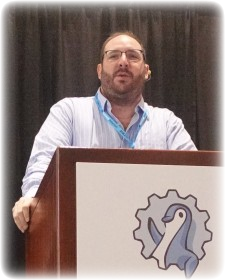
The adoption of open-source software in governments has had its ups and downs. While open source seems like a “no-brainer”, it turns out that governments can be surprisingly resistant to using FOSS for a variety of reasons. Federico González Waite spoke in the Open Government track at SCALE 22x in Pasadena, California to recount his experiences working with and for the Mexican government. He led multiple projects to switch away from proprietary, often predatory, software companies with some success—and failure.

See https://lwn.net/Articles/1013776/

EU OS: Community-led Proof-of-Concept for a free Operating System for the EU public sector

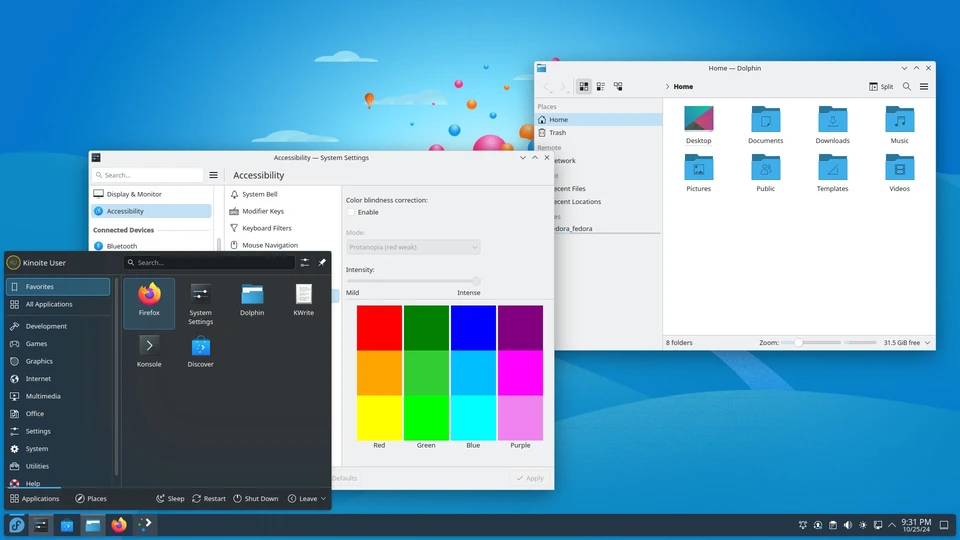
EU OS is a Proof-of-Concept for the deployment of a Fedora-based Linux operating system with a KDE Plasma desktop environment in a typical public sector organisation. Other organisations with similar requirements or less strict requirements may also learn from this Proof-of-Concept.

Despite the name, EU OS is technically not a new operating system. Distrowatch lists currently over 250 Linux operating systems (‘distributions’) and their various flavours, spins or subvariants are not even counted in. The added value of EU OS is a different one:

  • a common Linux OS as a base for all EU OS users with options to layer on top modifications (national layer, regional or sector-specific layer, organsation-specific layer)
  • a common desktop environment
  • a common method to manage
    • users and their data
    • software
    • devices

This project is very similar to what the SAOSS is trying to achieve within the South African public sector too.

See https://eu-os.gitlab.io/

Time to ditch US tech for homegrown options, says Dutch parliament

The motions were submitted and all passed yesterday during a discussion in the Netherlands’ House of Representatives on concerns about government data being shipped overseas. While varied, they all center on the theme of calling on the government to replace software and hardware made by US tech companies, acquire new contracts with Dutch companies who offer similar services, and generally safeguard the country’s digital sovereignty.

“With each IT service our government moves to American tech giants, we become dumber and weaker,” Dutch MP Barbara Kathmann, author of four of the motions, told The Register.

See https://www.theregister.com/2025/03/19/dutch_parliament_us_tech/

Open source software can benefit South African youth, fight joblessness

This is most definitely the case, and was one of the reasons that the South African Cabinet approved (and never rescinded?) the policy that indicated that all future software developed for government would be based on open standards, and that government would migrate its current software to open source.

It was all about reducing costs, and/or investing in the local economy to create jobs, and also to establish SA’s digital sovereignty.

Open source software provides a very low barrier of entry to learning, as well as for businesses. Importantly, it also makes it easy to examine how it works, and even to modify it (in other words, to customise it for local use).

Some claim that open source may not just be dropped in and ready for use in government. That is quite true, but it should still be a LOT cheaper than trying to implement Oracle ERP in a UK municipality? A country can’t really go wrong with using open standards (anyone can compete) and investing in local skills and businesses.

We have heard very little (to nothing) about open source in the South African government since 2008/2009 or so. It is very refreshing to see this being given some media time again.

See https://www.sowetanlive.co.za/opinion/2025-03-05-opinion-open-source-software-can-benefit-youth-fight-joblessness

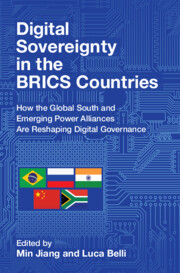
Digital Sovereignty in the BRICS Countries

Published by Cambridge University Press as an open access publication, so it is freely downloadable from https://www.cambridge.org/core/books/digital-sovereignty-in-the-brics-countries/27E9FD7E4579C76C8D4BA52F7670B431.

It is an interesting analysis on this topic of Brazil, Russia, China and South Africa, and is very relevant to those involved in digital governance, cybersecurity, or e-Government.

Really nothing we don’t know about, but interesting to see they also picked up on great intentions but lacklustre execution of planning.

Chapter 4 deals with South Africa, and what I found especially appealing were the parts about FOSS Activism and decentralised social networks on pages 30-31, 190, and 192-209.

Yes, many of those FOSS activists are still around and just as passionate as back in the day, except most have left government service by now. They still keep in contact though.

German Sovereign Tech Fund: Investing over €23 million in 60 open technologies

From their blog:

Throughout our second year, the Sovereign Tech Fund identified and invested in even more foundational open source technologies. With nearly 500 submissions proposing over €114 million in work since we started accepting applications, the need for support has never been more clear. By financing critical projects like Log4j, we’re commissioning much-needed maintenance, security work, and improvements in the public interest. The work on these components benefits all the companies, organizations, and individuals who depend on the open technologies that comprise our shared digital infrastructure.

In August, we announced a new initiative, the fellowship for maintainers. It addresses a critical challenge in the open source ecosystem: how we can support the dedicated individuals who keep our digital infrastructure running. The fellowship is designed around the lived reality of how many maintainers work: stretched across multiple technologies, multi-faceted, and often behind the scenes. In the pilot year of the program, it will pay up to five maintainers of critical open source components for 12 months, for work that is hard to quantify for funding applications.

See https://www.sovereigntechfund.de/news/celebrating-two-years-of-empowering-public-digital-infrastructure

Kelsey Hightower: If governments rely on FOSS, they should fund it

Acclaimed engineer Kelsey Hightower, who stopped coding for money in 2023, remains an influential figure in the world of software, and he’s proposing something that might stir up the open source community.

Funding open source is an ongoing hot topic. During a chat at Civo’s recent Navigate event, Hightower joked with us how companies were happy to spend big on cloud subscriptions but tended to skimp when it came to paying a comparatively token amount for open source.

Open source developers, however, require reimbersement, and Hightower has some interesting ideas on how that could be accomplished. “I think we have all got a little complacent,” he tells The Register.

It’s true that much of the open source that is used by governments, are often essential, otherwise they’d be paying an arm and a leg for some commercial cloud subscription. It’s important, not only to ensure getting some support, but to also ensure that the software is kept up to date and continues to receive support into the future.

Some governments do actually contribute already if I think of some examples from France, Germany, and the EU itself. FOSS software being used is not just the glossy front-ends that users see, it is often the essential plumbing holding the wide area networks together, or keeping the storage and databases going. In many cases, I’m pretty sure that CEOs are not even aware of how much open source software is used in their organisations.

See https://www.theregister.com/2024/09/19/kelsey_hightower_civo